


Italian Chestnut Honey: A European Tradition
|
Summary: Europe's chestnut forests stretch across 2.25 million hectares, from Tuscany's mountain ridges to Corsica's maquis and Greece's protected peaks. Italian chestnut honey sits at the bold end of this spectrum: dark, tannic, and mineral-heavy. This guide maps the key production regions, compares Italian, French, and Greek varieties on flavor and terroir, and gives you a practical framework for buying authentic products. |
Table of Contents
- The Chestnut Honey Heritage Across Europe
- Italian Terroir: Piedmont, Tuscany & Calabria
- Climate & Soil Snapshot
- French Chestnut Honey Profiles
- Greek Chestnut Honey Landscapes
- Tasting & Pairing Guide
- Buying Authentic European Chestnut Honey
- Conclusion: A Honey That Reflects Its Landscape
- FAQs
- References
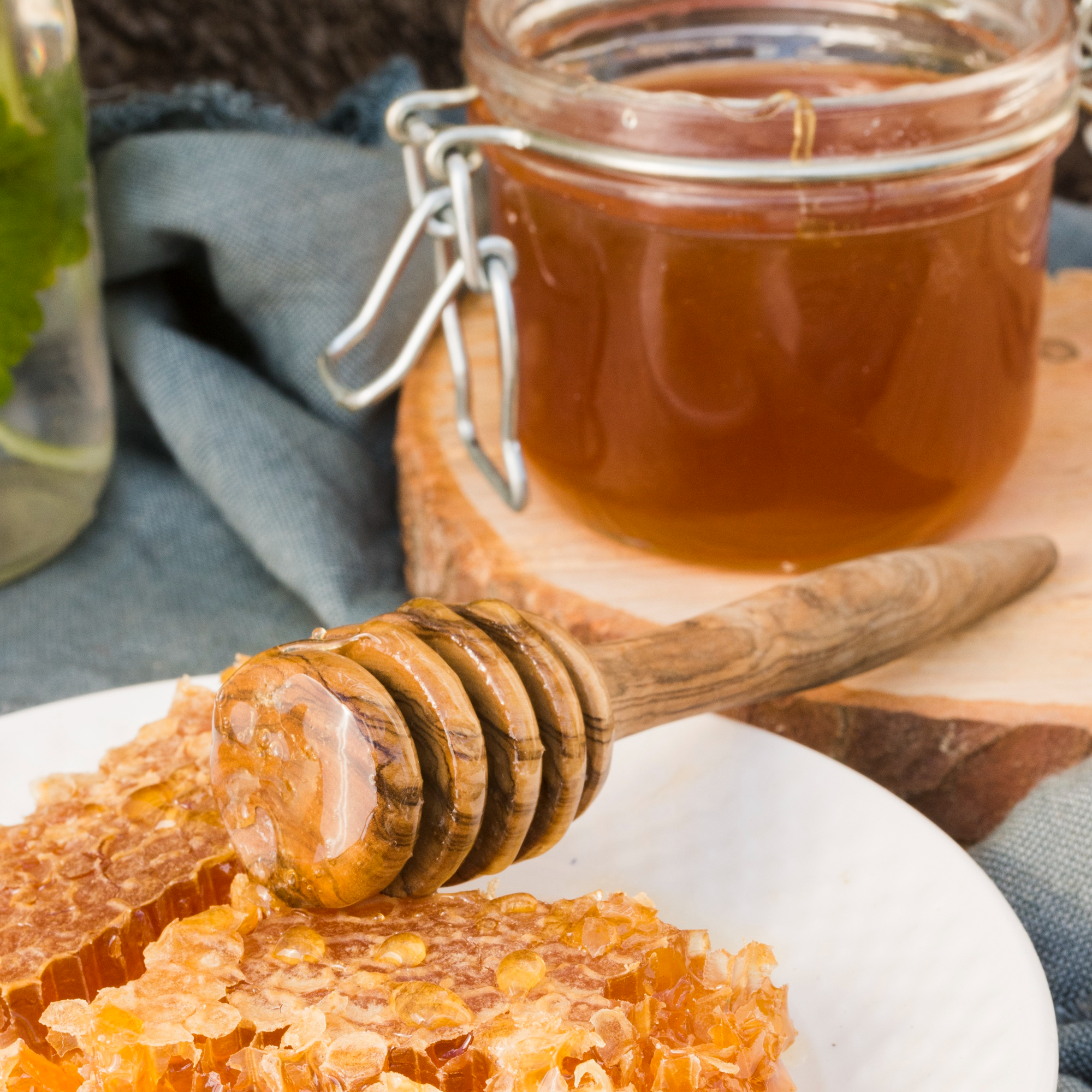
Chestnut forests line the hillsides of southern Europe in summer, filling with the low hum of hives positioned to catch a single, short bloom. Italian chestnut honey is among the most distinctive products to come out of this season.
This guide covers the European production map, regional flavor differences across Italy, France, and Greece, a side-by-side tasting comparison, and a checklist for buying the real thing.
The Chestnut Honey Heritage Across Europe
European chestnut honey production is built on one species: Castanea sativa. In 2004, it occupied 2.25 million hectares of European forest, with major concentrations in Italy, France, and the Iberian Peninsula. Italy, France, and Greece are the three honey-relevant centers, each producing distinct regional profiles.
The tree's ecological preferences explain why mountain zones dominate. C. sativa requires acidic to neutral soils and avoids limestone. Acidic soils predominate across the Mediterranean mountain ranges: Tuscany's Apennines, France's Cévennes and Corsica, and Greece's Pindus range. These soils pass elevated mineral loads into the nectar, which translate directly into the honey's conductivity, color depth, and flavor intensity.
Rainfall matters too. The tree demands over 600 mm of annual rainfall with no prolonged dry season. The same mountain climates that supply this moisture also create the wide daily temperature swings that concentrate secondary compounds in the nectar.
This is what "terroir" means in chestnut honey: the combination of soil acidity, rainfall pattern, altitude, and associated flora, all of which shift measurably from one region to the next.
Italian terroir: Piedmont, Tuscany & Calabria
Italian chestnut honey is bold by European standards. The forests of Piedmont, Tuscany, and Calabria produce a dark amber to near-black honey with smoky, tannic, leather, and forest-floor notes, a persistent bitterness, and a mineral finish.
The harvest window runs from late June through July, when chestnut trees bloom. Beekeepers across these regions practice nomadic apiculture, moving hives to follow the best blooms across different altitudes and microclimates. The result is a product tightly tied to a specific season and location.
Lunigiana honey in Tuscany is Italy’s strongest honey designation example: it was the first Italian honey to receive EU PDO status, it is the only PDO honey in Tuscany, and its production area is limited to 14 municipalities. Under EU law, PDO products must have their raw materials and all production stages tied to the defined region, making it a hard geographic designation.
Across all three regions, nomadic beekeeping is standard practice. Hives are relocated as chestnut bloom peaks, maximizing monofloral concentration. The result is a honey that is dark amber to near-black, with pronounced tannins, a woody-smoky aroma, and a persistent bitter finish. Pairing it with aged pecorino or a strong black tea cuts through the bitterness without masking it.
Climate & Soil Snapshot
|
Factor |
Value |
Honey-relevant effect |
|---|---|---|
|
Minimum annual rainfall |
>600 mm |
Supports continuous nectar flow |
|
Soil pH preference |
Mildly acidic to neutral |
Elevates mineral content in nectar |
|
Electrical conductivity (chestnut honey) |
0.737 to 1.667 mS/cm |
Signals high mineral density; exceeds standard EU nectar honey maximum of 0.8 mS/cm |
French Chestnut Honey Profiles
French production is concentrated in three zones: the Ardèche, the Cévennes, and Corsica. The mainland varieties tend toward a slightly lighter amber and a less pronounced bitterness than their Italian counterparts, partly due to undergrowth flora that introduces floral sweetness alongside the chestnut character.
Corsica stands apart. In 1998, Corsican beekeepers secured the first honey AOC in France, and the AOP "Miel de Corse, Mele di Corsica" now covers six distinct honey types from the island's seasonal zones. The châtaigneraie honey, harvested in late June from mid-mountain terrain, draws nectar from chestnuts, as well as from bramble, clematis, and népita (Corsican pennyroyal). The AOP tasting notes describe it as amber, long in the mouth, tannic, and bitter in the finish, a profile close to Italian chestnut honey but with a lighter base color and softer entry.
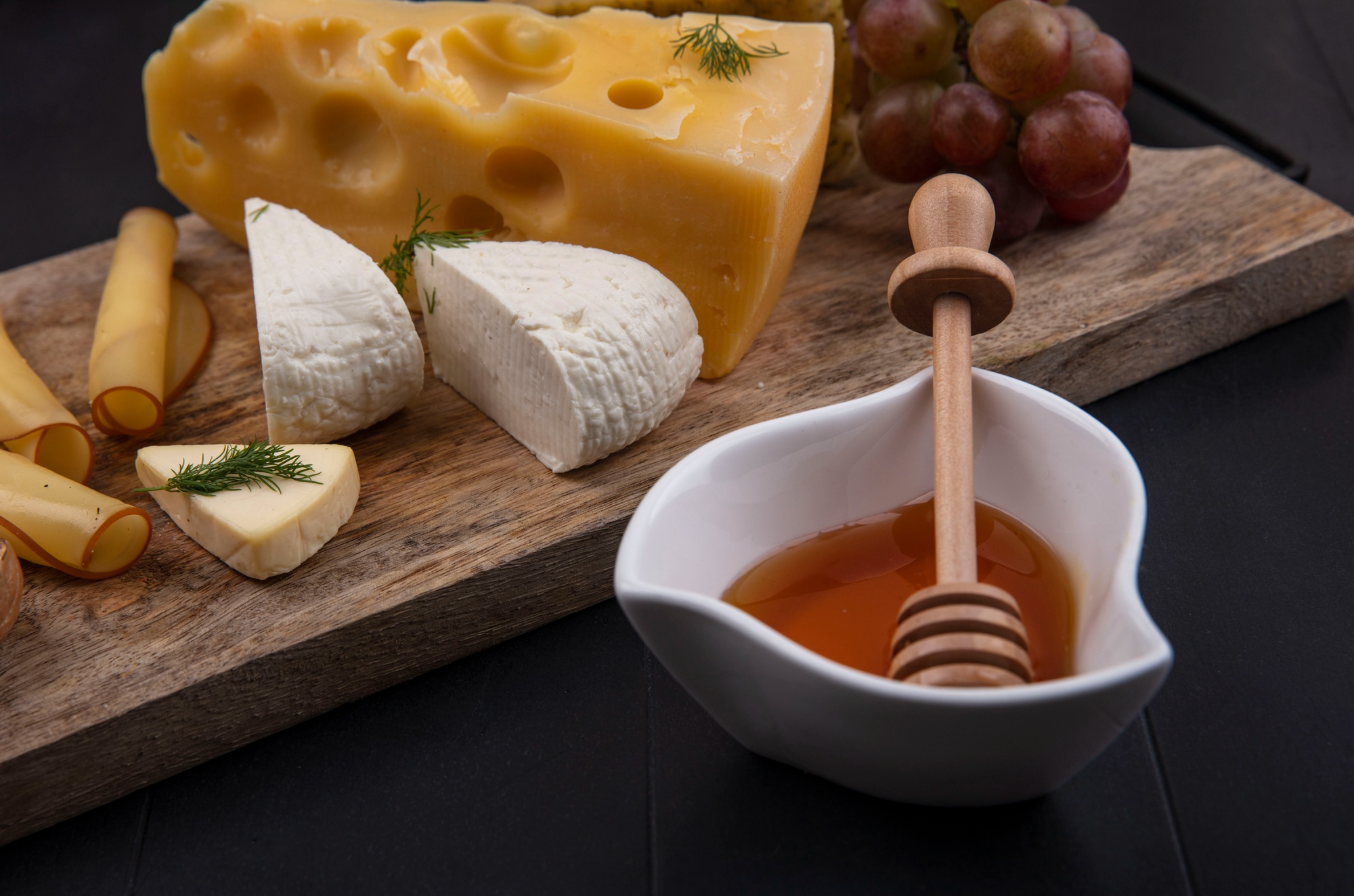
For cheese pairings, Comté holds up well against the tannins; Roquefort's salt and funk complement the bitter finish.
Greek Chestnut Honey Landscapes
Greece produces chestnut honey across three distinct mountain zones: Mount Athos, the Pindus range, and Crete. The Mount Athos forest is the most formally protected, designated under the EU's NATURA 2000 framework. That status limits industrial activity in the zone and contributes to the honey's clean, resin-influenced character.
Greek chestnut honey is reported to be rich in potassium, magnesium, manganese, and barium, as well as in fructose and tannins. Color varies with origin, from light brown to dark brown and near-black, depending on the forest composition. The resin influence from surrounding conifers gives some Greek varieties a herbal, slightly piney edge absent in Italian and French profiles.
Traditional uses include drizzling over thick Greek yogurt and loukoumades, the honey-soaked fried dough served at festivals. The high fructose content resists crystallization, with Greek chestnut honey typically remaining liquid for one to two years after harvest.
Tasting & Pairing Guide
 Start with French, then move to Greek, then finish with Italian chestnut honey. The Corsican AOP product introduces you to the tannic structure without full bitterness. A Greek product adds mineral and herbal depth. Italian brings the maximum intensity.
|
Origin |
Color |
Bitterness |
Flavor notes |
|---|---|---|---|
|
Italy |
Dark amber to near-black |
High |
Smoky, tannic, leather, mineral |
|
France (Corsica) |
Amber |
Medium |
Tannic, floral, népita, bramble |
|
Greece |
Light to dark brown |
Medium-high |
Herbal, resin, mineral, earthy |
Research indicates that the bitterness in chestnut honey traces to its high polyphenol content: total phenolic content in dark honeys like chestnut ranges from 40 to 100 mg GAE per 100 g, with quercetin and gallic acid among the dominant compounds.
Storage and crystallization tips:
- Store in a sealed glass jar away from direct light and heat sources.
- Keep at room temperature; refrigeration accelerates crystallization without benefit.
- Chestnut honey crystallizes slowly (one to two years) due to high fructose content.
- If crystallized, place the jar in warm water (below 45°C) and stir gently. Do not microwave.
- Once opened, use within 12 months for best flavor retention.
Calibrating your palate:
Start with French châtaigneraie, which offers the softest entry. Move to Greek for the herbal-mineral layer. Finish with Italian for full tannin and bitterness.
Pairing guide by food category:
- Cheese: Pecorino, aged Parmigiano, Comté, Roquefort, aged goat cheese
- Meat: Roasted pork, duck confit, grilled lamb, charcuterie
- Dessert: Dark chocolate, walnut tart, panna cotta, fig compote
- Beverages: Black tea, espresso, sweet vermouth, aged Scotch
|
Did you know? Chestnut honey has a glycemic index of 55.5, placing it in the moderate range. This is lower than US-tested buckwheat honey (73.4) and table sugar (approximately 65.0). A lower GI means a slower rise in blood glucose after consumption. |
Buying Authentic European Chestnut Honey
The label "chestnut honey" carries no uniform standard. The Lunigiana PDO and Corsica AOP are the two highest-assurance designations available to US buyers: both require geographic restriction, botanical purity, and third-party verification.
The EU has not fully harmonized monofloral standards across member states, meaning label stringency varies. But from 2026, EU regulations will require blended honey imports to list countries of origin in descending order with percentage shares, making single-origin labeling a more meaningful premium signal than ever.
For US buyers, here's a practical buying checklist:
- Look for a PDO or AOP seal (Lunigiana DOP, Miel de Corse AOP) as the highest-assurance marker.
- Confirm "single origin" means a named region or apiary, not just a country.
- Check for a harvest year on the label. Absence is a flag.
- Prefer jars listing a beekeeper name or producer code.
- "Raw" and "organic" are useful markers but secondary to PDO/AOP status.
Supporting small apiarists directly through specialty importers or farmers' markets also reduces the supply chain between harvest and jar, which matters for both freshness and traceability.
Conclusion: A Honey That Reflects Its Landscape
From the mountain forests of Italy to the protected groves of Corsica and the wild terrains of Greece, chestnut honey is less a single product and more a map of place. Its bitterness, depth, and mineral edge are not flaws to be softened but signatures of soil, climate, and craft.
To taste it is to move through regions, seasons, and traditions. each jar carrying the imprint of where it was made. And with the right markers of authenticity, what you bring home isn’t just honey but a precise expression of European terroir.
FAQs
Is Himalayan chestnut honey different from European chestnut honey?
Yes, in several meaningful ways. Himalayan chestnut honey is produced by Apis cerana himalaya above 3,500 meters in Nepal, from Castanea species, including wild Nepalese variants. European chestnut honey uses Castanea sativa at lower altitudes, harvested by Apis mellifera. The extreme elevation, UV exposure, and temperature variation in the Himalayas produce a distinct polyphenol profile, higher KYNA levels, and a more intense mineral character than European equivalents.
Chestnut honey vs. Italian chestnut honey: which is better?
Italian chestnut honey is a specific regional category within the broader category of chestnut honey. "Better" depends on what you want from the jar. Italian chestnut honey, particularly the PDO-designated Lunigiana product, offers maximum terroir traceability and a bold, tannic profile. Generic "chestnut honey" without origin designation carries no guarantee of botanical purity or geographic specificity.
What does "single-origin chestnut honey" mean?
Single origin means the honey comes from one defined geographic area, ideally one apiary or one producer's hives in a named region. It is distinct from "monofloral," which refers to the botanical source. A single-origin chestnut honey is monofloral and traceable to a specific location. Labels with a named region, harvest year, and producer contact meet this standard.
Does chestnut honey crystallize faster than other honeys?
No. Chestnut honey crystallizes slowly, typically after one to two years, because of its high fructose-to-glucose ratio. Slow crystallization is normal and does not affect quality. Gentle rewarming in a warm water bath will restore a liquid texture without degrading the honey.
Is chestnut honey suitable for vegans and children?
Most vegans avoid all honey on principle, as it is an animal-produced food. Chestnut honey is no different from other honey in that respect. For children under 12 months, honey of any type carries a risk of infant botulism and should be avoided entirely. For children over 12 months with no allergies, chestnut honey is generally considered appropriate in normal dietary amounts. Consult a healthcare professional if in doubt.
How should European chestnut honey be stored after opening?
Seal the jar tightly after each use. Store at room temperature, away from direct sunlight and heat. Do not refrigerate; cold temperatures speed crystallization without extending shelf life. Once opened, use within 12 months for best flavor. If the honey crystallizes, place the sealed jar in warm water and stir gently until it returns to a liquid state.
Disclaimer: The information provided is for educational purposes only. Any references to health properties or traditional uses are not medical claims. Please consult a healthcare professional before making dietary or health-related decisions.
References
- https://forest.jrc.ec.europa.eu/en/european-atlas/qr-trees/sweet-chestnut/
- https://www.visittuscany.com/en/ideas/pdo-and-pgi-products-of-tuscany/
- https://www.ice.it/en/my-home/find-your-italian-partner/company-details/513925/PDO-HONEY-OF-LUNIGIANA---IL-PUNGIGLIONE
- https://www.corsicatours.com/en/inspirations/corsican-honey-in-all-its-forms
- https://www.honeytraveler.com/honey-by-country-region/italy-honey/tuscany-honey-italy/
- https://www.ditalia.com/products/italian-raw-organic-chestnut-honey
- https://ifst.onlinelibrary.wiley.com/doi/abs/10.1111/ijfs.12169
- https://www.euforgen.org/species/castanea-sativa
- https://plants.ces.ncsu.edu/plants/castanea-sativa/
- https://www.mdpi.com/2077-0472/13/1/75
- https://www.greecehighdefinition.com/blog/2021/4/18/hellenic-honey-its-types-characteristics-and-properties
- https://pmc.ncbi.nlm.nih.gov/articles/PMC12320770/
- https://www.airbornehoney.com/blogs/recipes-blog/how-monofloral-honeys-are-defined
- https://qsi-q3.com/monofloral-honey
- https://agriculture.ec.europa.eu/farming/animal-products/honey_en